

Eisenhorn
science fiction
Series · science fiction
The Manifold Trilogy series by Stephen Baxter has 3 known books (3 published) and is best read in publication order, starting with Time (1999).
Start here: Time (1999) — then read straight through in publication order.
The date order of published books and any announced future entries — the default way to read the series.
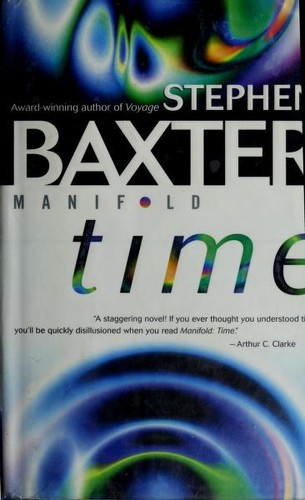
Time launches the Manifold Trilogy series, written by Stephen Baxter and first published in 1999. At 464 pages, it is a full-length entry in the series. From here the series continues with Space. Manifold Trilogy ran to 3 books, concluding in 2001. Published in the UK as Manifold: Time.
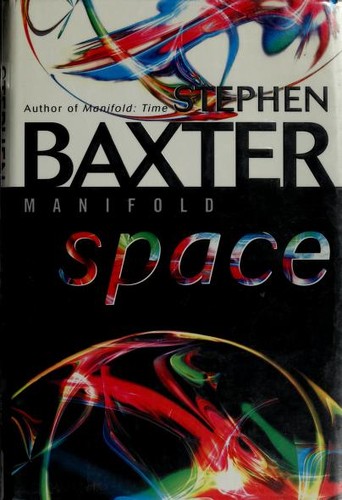
Alternative text for cover: Cover of TimeSpace is the second installment of the Manifold Trilogy series by Stephen Baxter, published in 2000. At 464 pages, it is a full-length entry in the series. Time comes before it, and Origin follows. Published in the UK as Manifold: Space.
Alternative text for cover: Cover of SpaceOrigin is the third installment of the Manifold Trilogy series by Stephen Baxter, published in 2001. At 496 pages, it is a full-length entry in the series. Following Space, it is the newest addition to the series so far. Published in the UK as Manifold: Origin.
Alternative text for cover: Cover of OriginStephen Baxter's Manifold books take a single premise -- the Fermi Paradox, the unsettling silence where an intelligent, spacefaring galaxy should be -- and run it through three structurally similar but independent novels, each imagining a different answer and a different fate for the same lead character, engineer-turned-astronaut Reid Malenfant. Time (1999) finds Malenfant chasing a signal that suggests humanity is catastrophically alone, and racing to prevent an extinction-level cosmic event. Space (2000) reboots the premise: an alternate Malenfant discovers the galaxy isn't empty at all, but saturated with other intelligences, and that abundance turns out to be nearly as dangerous as isolation. Origin (2001) reboots again, pulling a third Malenfant into a shattered, parallel-Earth scenario that interrogates human origins and evolution directly.
Rather than a continuous trilogy, Manifold is closer to three variations on a theme -- an author using the same character and core question to stress-test different hard-SF answers to "where is everybody?" It's a structurally unusual project even by Baxter's standards, and one of his most purely idea-driven works: each novel is a self-contained thought experiment rather than a sequel to the last.
Three: Time (1999), Space (2000) and Origin (2001).
Any order -- the three novels are independent, alternate-timeline variations on the same premise and character rather than a continuous sequential story.
No -- each novel features a different-timeline version of protagonist Reid Malenfant exploring a different answer to the Fermi Paradox (why the galaxy appears empty of other intelligent life), functioning as standalone thought experiments rather than sequels.
Each novel is built around the Fermi Paradox -- the question of why an ancient, vast galaxy shows no obvious sign of other intelligent civilizations -- and dramatizes a different, mutually exclusive possible answer.
No -- it shares no continuity with the Xeelee Sequence, Destiny's Children, the NASA Trilogy, Time's Odyssey or The Long Earth.
Reading order last verified .