




Amelia Peabody
historical mystery
Series · historical fiction
The Aubrey-Maturin series by Patrick O'Brian has 21 known books (21 published) and is best read in publication order, starting with Master and Commander (1969). The latest book with a fully recorded publication date is The Hundred Days.
Start here: Master and Commander (1969) — then read straight through in publication order.
The date order of published books and any announced future entries — the default way to read the series.
"Master and Commander" (1969, 402 pages) opens Patrick O'Brian's twenty-book Aubrey-Maturin sequence, introducing bluff Royal Navy officer Jack Aubrey and ship's surgeon-naturalist-spy Stephen Maturin, who meet as strangers at a concert in Menorca in 1800 and nearly duel before becoming friends. Its early chapters are famous for throwing readers straight into period naval jargon with little hand-holding — most fans say it's worth pushing through the first hundred pages — and it later lent its title to the 2003 film adaptation.
Alternative text for cover: Cover of Master and Commander"Post Captain" (1972, 528 pages) is the second Aubrey-Maturin novel, continuing directly from "Master and Commander" as O'Brian's twenty-book sequence unfolds as one unbroken narrative rather than a series of standalone adventures, following Jack Aubrey's rise through the Napoleonic-era Navy alongside Stephen Maturin's parallel, secret career gathering intelligence.
Alternative text for cover: Cover of Post Captain"HMS Surprise" (1973, 359 pages) is the third entry in Patrick O'Brian's sequence, sitting between "Post Captain" and "The Mauritius Command" in a series prized less for episodic war-adventure than for its sustained character study of Jack Aubrey's appetite and courage against Stephen Maturin's melancholy intellect.
Alternative text for cover: Cover of HMS SurpriseFollowing "HMS Surprise" into print in 1977, "The Mauritius Command" (315 pages) is the fourth Aubrey-Maturin novel, part of the continuous narrative O'Brian built across two decades chronicling Jack's naval career and Stephen's covert intelligence work across the Mediterranean, the East Indies and beyond.
Alternative text for cover: Cover of The Mauritius Command"Desolation Island" (1978, 312 pages) follows "The Mauritius Command" as the fifth Aubrey-Maturin novel, continuing O'Brian's immersive, period-accurate rendering of sailing, gunnery and naval medicine that readers say takes some adjustment before it clicks — and rewards patience once it does.
Alternative text for cover: Cover of Desolation IslandThe sixth Aubrey-Maturin novel, "The Fortune of War" (1979, 329 pages) followed "Desolation Island" into print, continuing the odd-couple friendship at the series' heart — Jack all appetite and social tin ear, Stephen all intellect and moral seriousness — as it unfolds across the Napoleonic Wars.
Alternative text for cover: Cover of The Fortune of WarAt 382 pages, "The Surgeon's Mate" (1980) is the seventh book in Patrick O'Brian's single continuous Aubrey-Maturin narrative, carrying Jack Aubrey and Stephen Maturin's story further through the naval politics and period detail the series is prized for.
Alternative text for cover: Cover of The Surgeon's Mate"The Ionian Mission" (1981, 367 pages) follows "The Surgeon's Mate" as the eighth Aubrey-Maturin novel, continuing Jack's Napoleonic-era naval career and Stephen's quieter work as a naturalist and intelligence agent in the Mediterranean theatre the series returns to repeatedly.
Alternative text for cover: Cover of The Ionian MissionPublished in 1983 at 351 pages, "Treason's Harbour" is the ninth book in O'Brian's twenty-novel sequence, part of a series praised for its historical authenticity and dry wit as much as for its plotting — a character study set aboard warships more than a conventional war-adventure.
Alternative text for cover: Cover of Treason's Harbour"The Far Side of the World" (1984, 368 pages) follows "Treason's Harbour" as the tenth Aubrey-Maturin novel, sending Jack and Stephen further from the Mediterranean into the wider world the series ranges across, from the East Indies to the coast of South America.
Alternative text for cover: Cover of The Far Side of the World"The Reverse of the Medal" (1986, 287 pages) is the eleventh Aubrey-Maturin novel, arriving as O'Brian's continuous narrative of Jack's rise and Stephen's covert intelligence work entered its second decade — the series by this point spans the Mediterranean, the East Indies and South America.
Alternative text for cover: Cover of The Reverse of the MedalThe twelfth novel in the sequence, "The Letter of Marque" (1988, 280 pages) followed "The Reverse of the Medal" into print, continuing Patrick O'Brian's unbroken chronicle of Jack Aubrey and Stephen Maturin rather than jumping ahead or filling in gaps in their story.
Alternative text for cover: Cover of The Letter of MarquePatrick O'Brian published "The Thirteen-Gun Salute" in 1989 as the thirteenth Aubrey-Maturin book, 320 pages continuing a series whose appeal rests on density and precision — the sailing, gunnery, medicine and naval politics of the period rendered in unapologetic, immersive detail.
Alternative text for cover: Cover of The Thirteen-Gun Salute"The Nutmeg of Consolation" (1991, 320 pages) followed "The Thirteen-Gun Salute" into print as the fourteenth Aubrey-Maturin novel, carrying Jack and Stephen's friendship and careers further through the world's oceans that give the series its scope.
Alternative text for cover: Cover of The Nutmeg of ConsolationBook fifteen of Patrick O'Brian's sequence, "Clarissa Oakes" was published in 1992 at 329 pages, continuing the single unbroken narrative that traces Jack Aubrey's naval career and Stephen Maturin's parallel work as a naturalist and secret intelligence agent.
Alternative text for cover: Cover of Clarissa Oakes"The Wine-Dark Sea" (1993, 295 pages) is the sixteenth book in Patrick O'Brian's Aubrey-Maturin series, arriving well into the author's two-decade run of sustained prose quality that has made the series a natural next stop for Hornblower or Sharpe readers wanting more literary ambition.
Alternative text for cover: Cover of The Wine-Dark SeaPreceded by "The Wine-Dark Sea" and followed by "The Yellow Admiral," "The Commodore" (1995, 293 pages) holds the seventeenth spot in the Aubrey-Maturin sequence, deep into Jack and Stephen's decades-long friendship and naval-and-intelligence careers.
Alternative text for cover: Cover of The CommodorePatrick O'Brian published "The Yellow Admiral" in 1996 as the eighteenth Aubrey-Maturin book, 368 pages continuing the character study of Jack Aubrey's appetite and courage against Stephen Maturin's melancholy intellect that has defined the series since "Master and Commander."
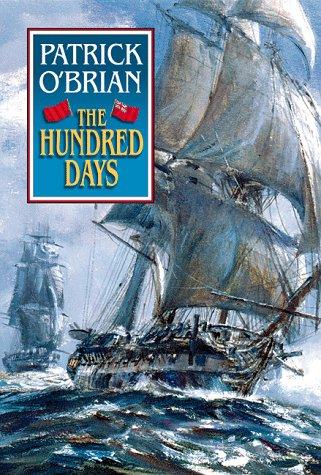
Alternative text for cover: Cover of The Yellow AdmiralAt 284 pages, "The Hundred Days" (September 1998) is the nineteenth Aubrey-Maturin novel, published as O'Brian neared the end of a sequence he would leave unfinished at his death two years later, still following Jack and Stephen through the closing stages of the Napoleonic Wars.
Alternative text for cover: Cover of The Hundred DaysPatrick O'Brian published "Blue at the Mizzen" in 1999 as the twentieth and, in his lifetime, final completed Aubrey-Maturin novel — 262 pages closing out the numbered sequence before the posthumous fragment that followed.
Alternative text for cover: Cover of Blue at the MizzenPublished posthumously in 2004, "The Final Unfinished Voyage of Jack Aubrey" (192 pages) is a facsimile of the incomplete manuscript Patrick O'Brian left at his death in 2000 — a curiosity for series completists rather than a proper twenty-first novel, since skipping it loses nothing of Jack and Stephen's story.
Alternative text for cover: Cover of The Final Unfinished Voyage of Jack AubreyPatrick O'Brian's Aubrey-Maturin novels follow the friendship of Jack Aubrey, a bluff, brilliant, and perpetually broke Royal Navy officer, and Stephen Maturin, the ship's surgeon who is also a naturalist and, unbeknownst to most of the crew, a British intelligence agent. The two meet as strangers at a concert in Menorca in 1800 — nearly duelling before becoming friends — and the twenty novels that follow chart Jack's rise through the Napoleonic-era Navy and Stephen's parallel career gathering intelligence across the world's oceans, from the Mediterranean to the East Indies to the coast of South America.
The appeal is O'Brian's density and precision: the sailing, gunnery, medicine, and naval politics of the period are rendered in immersive, unapologetic period detail (readers commonly describe an early adjustment period before the nautical vocabulary clicks), wrapped around one of English fiction's great odd-couple friendships — Jack all appetite, courage, and social tin ear; Stephen all intellect, melancholy, and moral seriousness. It's less a war-adventure series than a character study that happens to be set aboard warships, prized for its historical authenticity, dry wit, and the sheer sustained quality of the prose across two decades of writing.
The series is complete: O'Brian died in 2000 partway through a twenty-first novel, published posthumously in 2004 as an unfinished manuscript fragment. It's the natural next stop for Hornblower or Sharpe readers who want the same era rendered with more literary ambition, and was the basis for the 2003 film Master and Commander: The Far Side of the World.
Twenty complete novels, from Master and Commander (1969) to Blue at the Mizzen (1999), plus a twenty-first volume, The Final Unfinished Voyage of Jack Aubrey (2004), collecting the unfinished manuscript O'Brian left at his death in 2000.
Publication order, which is also the internal chronology: Master and Commander, Post Captain, HMS Surprise, and onward through Blue at the Mizzen. O'Brian wrote it as one continuous story, so there's no alternate reading order to consider.
Yes. Patrick O'Brian died in January 2000 while writing the twenty-first novel; the three chapters he completed were published in 2004 as The Final Unfinished Voyage of Jack Aubrey, a facsimile of the working manuscript rather than a finished book.
The 2003 film borrows its title from the first and tenth novels but its plot and incidents are drawn from across the whole series; it isn't a direct adaptation of any single book.
The opening of Master and Commander is dense with period naval terminology and is the series' biggest barrier to entry. Most readers who push through the first several chapters say the friendship between Jack and Stephen quickly makes the vocabulary worth learning.
historical mystery

historical mystery

historical fiction

historical mystery

historical fiction

historical mystery

historical mystery

historical fiction
Reading order last verified .