


Charlotte and Thomas Pitt
historical mystery
Series · historical fiction
The Sharpe series by Bernard Cornwell has 26 known books (26 published) and is best read in publication order, starting with Sharpe's Eagle (1981). The latest book with a fully recorded publication date is Sharpe's Storm.
Start here: Sharpe's Eagle (1981) — then read straight through in publication order.
The date order of published books and any announced future entries — the default way to read the series.
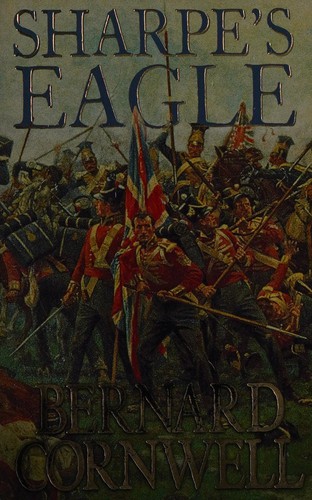
Sharpe's Eagle, published 9 February 1981, was the first Sharpe novel Bernard Cornwell wrote and remains many readers' entry point into the series -- 296 pages that drop Richard Sharpe, already an officer, into the Peninsular War at the Battle of Talavera. Sharpe's Gold followed the same year.
Alternative text for cover: Cover of Sharpe's EagleSharpe's Gold arrived just months after Cornwell's debut Sharpe's Eagle, closing out 1981 at 256 pages and continuing Richard Sharpe's Peninsular War campaign toward Sharpe's Company. Like every book in the series, it follows the workhouse-raised soldier and his Irish friend Sergeant Patrick Harper through Cornwell's ground-level battle sequences.
Alternative text for cover: Cover of Sharpe's GoldSharpe's Company (1982, 280 pages) carries Richard Sharpe's Napoleonic campaign from Sharpe's Gold toward Sharpe's Sword, part of the run of Peninsular War novels Cornwell wrote first, in the 1980s, before later returning to fill in Sharpe's earlier career.
Alternative text for cover: Cover of Sharpe's CompanySharpe's Sword, published in 1983 at 319 pages, sits between Sharpe's Company and Sharpe's Enemy in the original 1980s run of Peninsular War novels, following Sharpe and Sergeant Harper through another of Cornwell's meticulously researched sieges.
Alternative text for cover: Cover of Sharpe's SwordSharpe's Enemy (1984, 352 pages) continues the Peninsular War timeline from Sharpe's Sword to Sharpe's Honour, part of the original sequence Cornwell wrote through the 1980s tracking Richard Sharpe's rise despite the class system stacked against him.
Alternative text for cover: Cover of Sharpe's EnemySharpe's Honour, published in 1985 at 320 pages, slots between Sharpe's Enemy and Sharpe's Regiment in Cornwell's original run of Peninsular War novels, keeping Sharpe and Harper's friendship at the center of the fighting.
Alternative text for cover: Cover of Sharpe's HonourSharpe's Regiment (1986, 352 pages) carries the campaign from Sharpe's Honour to Sharpe's Siege, another entry in the 1980s Peninsular War sequence that built the series' reputation for ground-level, meticulously researched battle writing.
Alternative text for cover: Cover of Sharpe's RegimentSharpe's Siege, published in 1987 at 320 pages, follows Sharpe's Regiment and precedes Sharpe's Rifles -- one of the sieges the series is known for, rendered with Cornwell's trademark attention to Napoleonic-era military detail.
Alternative text for cover: Cover of Sharpe's SiegeSharpe's Rifles (1988, 351 pages) is often recommended as the most natural jumping-on point for new readers, a self-contained introduction to Richard Sharpe that follows Sharpe's Siege and precedes Sharpe's Revenge in the original 1980s sequence.
Alternative text for cover: Cover of Sharpe's RiflesSharpe's Revenge, published in 1989 at 352 pages, carries the series from Sharpe's Rifles toward Sharpe's Waterloo, continuing Cornwell's 1980s run of Peninsular War novels toward the campaign's climactic battles.
Alternative text for cover: Cover of Sharpe's RevengeSharpe's Waterloo (1990, 384 pages) brings Richard Sharpe to the battle that ends the Napoleonic Wars, following Sharpe's Revenge and preceding Sharpe's Devil in Cornwell's original sequence -- the culmination of two decades of campaigning.
Alternative text for cover: Cover of Sharpe's WaterlooSharpe's Devil, correctly dated to 1992, follows Sharpe's Waterloo and precedes the short story Sharpe's Christmas at 322 pages, extending Richard Sharpe's story past the Napoleonic Wars' official end at Waterloo.
Alternative text for cover: Cover of Sharpe's DevilBernard Cornwell followed "Sharpe's Devil" with "Sharpe's Christmas" in the Sharpe series before moving on to "Sharpe's Battle." It is a short story rather than a full-length novel.
Alternative text for cover: Cover of Sharpe's ChristmasSharpe's Battle (1995, 379 pages) picks the series back up after the short story Sharpe's Christmas and leads into Sharpe's Tiger, part of Cornwell's ongoing Peninsular War timeline for Richard Sharpe and Sergeant Harper.
Alternative text for cover: Cover of Sharpe's BattleSharpe's Tiger (1997, 384 pages) opens the India trilogy Cornwell added from 1997 onward -- Tiger, Triumph, and Fortress -- written once his style had matured, taking Sharpe back to his earliest days as a young private serving in India, before he became an officer.
Alternative text for cover: Cover of Sharpe's TigerSharpe's Triumph (1998, 382 pages) is the second book of the India trilogy, following Sharpe's Tiger and preceding Sharpe's Fortress -- part of the prequel run Cornwell wrote from 1997 onward to fill in Sharpe's early career, a decade after the Peninsular War novels he'd written first.
Alternative text for cover: Cover of Sharpe's TriumphSharpe's Fortress closes the India trilogy in late 1998 at 366 pages, following Sharpe's Triumph and preceding the short story Sharpe's Skirmish -- the last of the three India prequels Cornwell added to the series from 1997 onward.
Alternative text for cover: Cover of Sharpe's FortressAt 64 pages, "Sharpe's Skirmish" carries the Sharpe series from "Sharpe's Fortress" toward "Sharpe's Trafalgar." It is a short story rather than a full-length novel.
Alternative text for cover: Cover of Sharpe's SkirmishSharpe's Trafalgar (2000, 293 pages) follows the short story Sharpe's Skirmish and precedes Sharpe's Prey, moving Richard Sharpe's story onto the sea for the naval battle that gives the book its name.
Alternative text for cover: Cover of Sharpe's TrafalgarSharpe's Prey, published in 2001 at 260 pages, carries the series from Sharpe's Trafalgar to Sharpe's Havoc, continuing the early-career material Cornwell added to the Sharpe timeline after the original 1980s novels.
Alternative text for cover: Cover of Sharpe's PreySharpe's Havoc (2003, 384 pages) follows Sharpe's Prey and precedes Sharpe's Escape, part of the string of early-2000s novels Cornwell wrote to flesh out Richard Sharpe's Peninsular War career alongside his earlier bestsellers.
Alternative text for cover: Cover of Sharpe's HavocSharpe's Escape, published in 2005 at 376 pages, sits between Sharpe's Havoc and Sharpe's Fury in Cornwell's ongoing expansion of the Peninsular War timeline, keeping Sharpe and Harper's decades-long friendship at its center.
Alternative text for cover: Cover of Sharpe's EscapeSharpe's Fury (2006, 378 pages) follows Sharpe's Escape and precedes a fifteen-year gap before Sharpe's Assassin, the last of the early-2000s novels before Cornwell returned to the series in the 2020s to close out Sharpe's career.
Alternative text for cover: Cover of Sharpe's FurySharpe's Assassin, published in 2021 at 400 pages, is the first of three late additions -- with Sharpe's Command and Sharpe's Storm -- that Cornwell wrote between 2021 and 2025 to finally close the gaps at the end of Richard Sharpe's career, decades after the original novels.
Alternative text for cover: Cover of Sharpe's AssassinSharpe's Command (2023, 320 pages) is the second of the three late-career additions Cornwell wrote from 2021 onward, following Sharpe's Assassin and preceding Sharpe's Storm as the series finally fills in the end of Richard Sharpe's soldiering years.
Alternative text for cover: Cover of Sharpe's CommandSharpe's Storm, published in 2025 at 368 pages, is the third and most recent of the late additions that close out Richard Sharpe's story, following Sharpe's Command more than four decades after Cornwell began the series with Sharpe's Eagle.
Alternative text for cover: Cover of Sharpe's StormThe order the story's events happen in, novellas slotted where they belong.
Sharpe's Tiger (1997, 384 pages) opens the India trilogy Cornwell added from 1997 onward -- Tiger, Triumph, and Fortress -- written once his style had matured, taking Sharpe back to his earliest days as a young private serving in India, before he became an officer.
Alternative text for cover: Cover of Sharpe's TigerSharpe's Triumph (1998, 382 pages) is the second book of the India trilogy, following Sharpe's Tiger and preceding Sharpe's Fortress -- part of the prequel run Cornwell wrote from 1997 onward to fill in Sharpe's early career, a decade after the Peninsular War novels he'd written first.
Alternative text for cover: Cover of Sharpe's TriumphSharpe's Fortress closes the India trilogy in late 1998 at 366 pages, following Sharpe's Triumph and preceding the short story Sharpe's Skirmish -- the last of the three India prequels Cornwell added to the series from 1997 onward.
Alternative text for cover: Cover of Sharpe's FortressSharpe's Trafalgar (2000, 293 pages) follows the short story Sharpe's Skirmish and precedes Sharpe's Prey, moving Richard Sharpe's story onto the sea for the naval battle that gives the book its name.
Alternative text for cover: Cover of Sharpe's TrafalgarSharpe's Prey, published in 2001 at 260 pages, carries the series from Sharpe's Trafalgar to Sharpe's Havoc, continuing the early-career material Cornwell added to the Sharpe timeline after the original 1980s novels.
Alternative text for cover: Cover of Sharpe's PreySharpe's Rifles (1988, 351 pages) is often recommended as the most natural jumping-on point for new readers, a self-contained introduction to Richard Sharpe that follows Sharpe's Siege and precedes Sharpe's Revenge in the original 1980s sequence.
Alternative text for cover: Cover of Sharpe's RiflesSharpe's Havoc (2003, 384 pages) follows Sharpe's Prey and precedes Sharpe's Escape, part of the string of early-2000s novels Cornwell wrote to flesh out Richard Sharpe's Peninsular War career alongside his earlier bestsellers.
Alternative text for cover: Cover of Sharpe's HavocSharpe's Eagle, published 9 February 1981, was the first Sharpe novel Bernard Cornwell wrote and remains many readers' entry point into the series -- 296 pages that drop Richard Sharpe, already an officer, into the Peninsular War at the Battle of Talavera. Sharpe's Gold followed the same year.
Alternative text for cover: Cover of Sharpe's EagleSharpe's Gold arrived just months after Cornwell's debut Sharpe's Eagle, closing out 1981 at 256 pages and continuing Richard Sharpe's Peninsular War campaign toward Sharpe's Company. Like every book in the series, it follows the workhouse-raised soldier and his Irish friend Sergeant Patrick Harper through Cornwell's ground-level battle sequences.
Alternative text for cover: Cover of Sharpe's GoldSharpe's Escape, published in 2005 at 376 pages, sits between Sharpe's Havoc and Sharpe's Fury in Cornwell's ongoing expansion of the Peninsular War timeline, keeping Sharpe and Harper's decades-long friendship at its center.
Alternative text for cover: Cover of Sharpe's EscapeSharpe's Fury (2006, 378 pages) follows Sharpe's Escape and precedes a fifteen-year gap before Sharpe's Assassin, the last of the early-2000s novels before Cornwell returned to the series in the 2020s to close out Sharpe's career.
Alternative text for cover: Cover of Sharpe's FurySharpe's Battle (1995, 379 pages) picks the series back up after the short story Sharpe's Christmas and leads into Sharpe's Tiger, part of Cornwell's ongoing Peninsular War timeline for Richard Sharpe and Sergeant Harper.
Alternative text for cover: Cover of Sharpe's BattleSharpe's Company (1982, 280 pages) carries Richard Sharpe's Napoleonic campaign from Sharpe's Gold toward Sharpe's Sword, part of the run of Peninsular War novels Cornwell wrote first, in the 1980s, before later returning to fill in Sharpe's earlier career.
Alternative text for cover: Cover of Sharpe's CompanySharpe's Command (2023, 320 pages) is the second of the three late-career additions Cornwell wrote from 2021 onward, following Sharpe's Assassin and preceding Sharpe's Storm as the series finally fills in the end of Richard Sharpe's soldiering years.
Alternative text for cover: Cover of Sharpe's CommandSharpe's Sword, published in 1983 at 319 pages, sits between Sharpe's Company and Sharpe's Enemy in the original 1980s run of Peninsular War novels, following Sharpe and Sergeant Harper through another of Cornwell's meticulously researched sieges.
Alternative text for cover: Cover of Sharpe's SwordAt 64 pages, "Sharpe's Skirmish" carries the Sharpe series from "Sharpe's Fortress" toward "Sharpe's Trafalgar." It is a short story rather than a full-length novel.
Alternative text for cover: Cover of Sharpe's SkirmishSharpe's Enemy (1984, 352 pages) continues the Peninsular War timeline from Sharpe's Sword to Sharpe's Honour, part of the original sequence Cornwell wrote through the 1980s tracking Richard Sharpe's rise despite the class system stacked against him.
Alternative text for cover: Cover of Sharpe's EnemySharpe's Honour, published in 1985 at 320 pages, slots between Sharpe's Enemy and Sharpe's Regiment in Cornwell's original run of Peninsular War novels, keeping Sharpe and Harper's friendship at the center of the fighting.
Alternative text for cover: Cover of Sharpe's HonourSharpe's Regiment (1986, 352 pages) carries the campaign from Sharpe's Honour to Sharpe's Siege, another entry in the 1980s Peninsular War sequence that built the series' reputation for ground-level, meticulously researched battle writing.
Alternative text for cover: Cover of Sharpe's RegimentSharpe's Storm, published in 2025 at 368 pages, is the third and most recent of the late additions that close out Richard Sharpe's story, following Sharpe's Command more than four decades after Cornwell began the series with Sharpe's Eagle.
Alternative text for cover: Cover of Sharpe's StormBernard Cornwell followed "Sharpe's Devil" with "Sharpe's Christmas" in the Sharpe series before moving on to "Sharpe's Battle." It is a short story rather than a full-length novel.
Alternative text for cover: Cover of Sharpe's ChristmasSharpe's Siege, published in 1987 at 320 pages, follows Sharpe's Regiment and precedes Sharpe's Rifles -- one of the sieges the series is known for, rendered with Cornwell's trademark attention to Napoleonic-era military detail.
Alternative text for cover: Cover of Sharpe's SiegeSharpe's Revenge, published in 1989 at 352 pages, carries the series from Sharpe's Rifles toward Sharpe's Waterloo, continuing Cornwell's 1980s run of Peninsular War novels toward the campaign's climactic battles.
Alternative text for cover: Cover of Sharpe's RevengeSharpe's Waterloo (1990, 384 pages) brings Richard Sharpe to the battle that ends the Napoleonic Wars, following Sharpe's Revenge and preceding Sharpe's Devil in Cornwell's original sequence -- the culmination of two decades of campaigning.
Alternative text for cover: Cover of Sharpe's WaterlooSharpe's Assassin, published in 2021 at 400 pages, is the first of three late additions -- with Sharpe's Command and Sharpe's Storm -- that Cornwell wrote between 2021 and 2025 to finally close the gaps at the end of Richard Sharpe's career, decades after the original novels.
Alternative text for cover: Cover of Sharpe's AssassinSharpe's Devil, correctly dated to 1992, follows Sharpe's Waterloo and precedes the short story Sharpe's Christmas at 322 pages, extending Richard Sharpe's story past the Napoleonic Wars' official end at Waterloo.
Alternative text for cover: Cover of Sharpe's DevilBernard Cornwell's Sharpe novels follow Richard Sharpe, a foundling raised in a London workhouse who enlists as a private soldier and — against every rule of the Georgian army — is commissioned into the officer ranks after saving the Duke of Wellington's life in India. From the storming of Seringapatam to the retreat to Corunna, the breaches of Badajoz and Ciudad Rodrigo, the charge at Salamanca, and finally the field of Waterloo itself, Sharpe fights his way across two decades of the Napoleonic Wars with a stolen French cavalry sword, a Baker rifle, and a loyalty to his men that his aristocratic superiors rarely extend to him.
The appeal is Cornwell's trademark: meticulously researched battle sequences told from ground level, a working-class hero who never stops resenting the class system he has to fight inside, and a huge, familiar supporting cast — chiefly Sergeant Patrick Harper, his Irish best friend and the closest thing the series has to a second lead. Readers come for the sieges and set-piece battles and stay for Sharpe and Harper's friendship, which survives court-martials, betrayals, and thirty-odd years of campaigning.
Cornwell wrote the books wildly out of chronological order across four decades, so the series is really two overlapping timelines: the original Peninsular War novels he wrote first in the 1980s, and the India and early-career prequels he added from 1997 onward, plus three late additions (2021-2025) that finally close the gaps at the end of Sharpe's career. It's the defining series for readers who want Napoleonic-era military history rendered as pulse-quick adventure fiction, in the company of Patrick O'Brian's Aubrey-Maturin novels or George MacDonald Fraser's Flashman.
24 full-length novels plus three short stories (Sharpe's Skirmish, Sharpe's Ransom, and Sharpe's Christmas), for 27 titles in total, published between 1981 and 2025.
Publication order is the easiest path and is what most editions and booksellers list: start with Sharpe's Eagle (1981) or Sharpe's Rifles (1988). Series purists who want Sharpe's career told start-to-finish can instead read the chronological order, which opens with the India trilogy (Sharpe's Tiger, Sharpe's Triumph, Sharpe's Fortress) — though many recommend saving India for after a few of the core Peninsular War novels.
No confirmed ending has been announced. Sharpe's Storm (2025) is the latest novel and several reviews speculated it could be Sharpe's last outing, but Bernard Cornwell has not announced the series is complete, and no new title is currently scheduled.
No. Sharpe's Skirmish, Sharpe's Ransom, and Sharpe's Christmas are brief, self-contained interludes originally written for charity and newspaper serialisation. They're pleasant extras for completists but skippable without losing any of the main story.
Both are late additions Cornwell wrote decades after the original run to fill gaps in Sharpe's career: Sharpe's Command (2023) is set in 1812, between Sharpe's Company and Sharpe's Sword, and Sharpe's Assassin (2021) picks up immediately after Sharpe's Waterloo in the Paris occupation of 1815. Sharpe's Storm (2025) sits between Sharpe's Regiment and Sharpe's Christmas, in November 1813.
historical mystery

historical mystery

historical mystery

historical fiction

historical fiction

historical mystery

historical mystery

historical fiction
Reading order last verified .