




Agent Pendergast
thriller
Series · thriller
The Tom Clancy's Op-Center series by Tom Clancy has 22 known books (22 published) and is best read in publication order, starting with Tom Clancy's Op-Center (1995). Tom Clancy wrote the series; books 1-22 were ghostwritten by Jeff Rovin; books 13-14 were ghostwritten by Dick Couch; books 13-16 were ghostwritten by George Galdorisi.
Start here: Tom Clancy's Op-Center (1995) — then read straight through in publication order.
The date order of published books and any announced future entries — the default way to read the series.
Tom Clancy's Op-Center, published in 1995 at 342 pages, opens the series and introduces the fictional National Crisis Management Center: director Paul Hood, intelligence chief Bob Herbert and General Mike Rodgers steering a lean Washington task force built to react to international flashpoints in hours. Created by Clancy and psychiatrist-turned-negotiator Steve Pieczenik, it was ghostwritten throughout by Jeff Rovin.
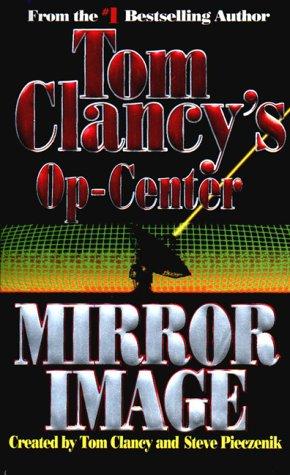
Alternative text for cover: Cover of Tom Clancy's Op-CenterMirror Image, published in 1995 at 448 pages, is the second Op-Center novel, ghostwritten by Jeff Rovin under the Tom Clancy brand just months after the series launched. It continues the crisis-room structure that anchors the whole run: Hood, Herbert and Rodgers moving between the Center's command chain and Rodgers's Strike Force in the field.
Alternative text for cover: Cover of Mirror ImageGames of State, the third Op-Center novel, was ghostwritten by Jeff Rovin and published in 1996 at 663 pages, by far the longest entry in the original run. It continues the series' formula of moving briskly between the crisis room, the field team, and the antagonists' side of an unfolding geopolitical flashpoint.
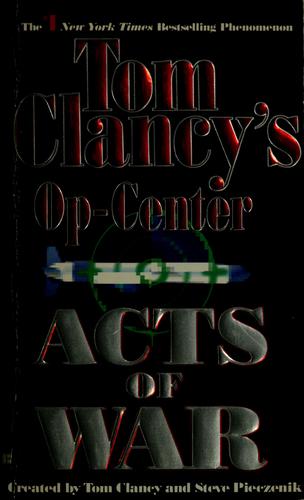
Alternative text for cover: Cover of Games of StateActs of War, the fourth entry in the series, was ghostwritten by Jeff Rovin and released in 1997 at 492 pages. Like the rest of the original 1995-2005 run, it follows the Center's continuous cast and command structure, with fallout from earlier crises carrying forward from one book to the next.
Alternative text for cover: Cover of Acts of WarBalance of Power, the fifth Op-Center novel, was ghostwritten by Jeff Rovin and published in 1998 at 464 pages. It's part of the original twelve-book run that should be read in sequence, since the Center's personnel and the political consequences of prior missions carry through the series.
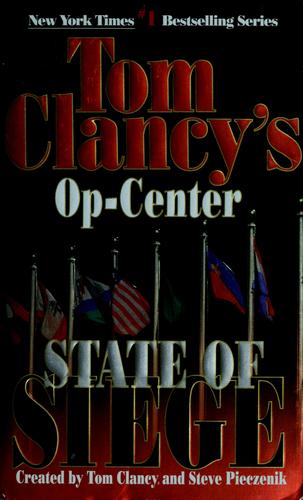
Alternative text for cover: Cover of Balance of PowerState of Siege, published in 1999 at 368 pages, is book six of Op-Center, credited to Tom Clancy's name but written by Jeff Rovin. Like the rest of the original run, it moves between Op-Center's Washington crisis room and Mike Rodgers's Strike Force reacting to the latest international flashpoint.
Alternative text for cover: Cover of State of SiegeDivide and Conquer, the seventh Op-Center novel, was ghostwritten by Jeff Rovin and published in 2000 at 362 pages. It continues the series' brisk, readable pace -- shorter and faster-moving than Clancy's own solo novels -- as Hood, Herbert and Rodgers work another crisis through the Center's single chain of command.
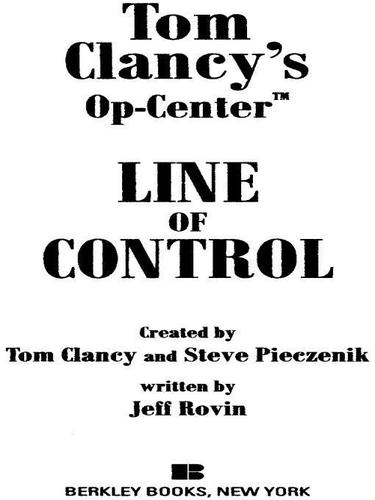
Alternative text for cover: Cover of Divide and ConquerLine of Control, the eighth Op-Center novel, was ghostwritten by Jeff Rovin and published in 2001 at 400 pages. By this point deep into the original run, the series had settled into its signature structure: satellite surveillance and diplomacy in Washington paired with Rodgers's Strike Force on the ground.
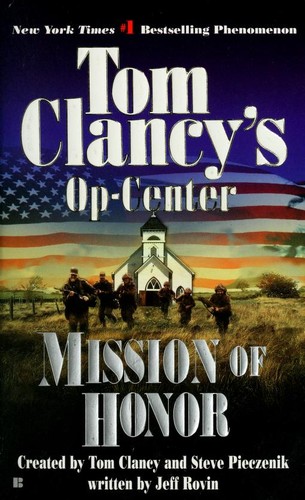
Alternative text for cover: Cover of Line of ControlMission of Honor, published in 2002 at 418 pages, is book nine of Op-Center, credited to Tom Clancy's name but written by Jeff Rovin. It carries forward the continuous cast and command structure of the original twelve-book run, with earlier crises' political fallout still shaping the Center's operations.
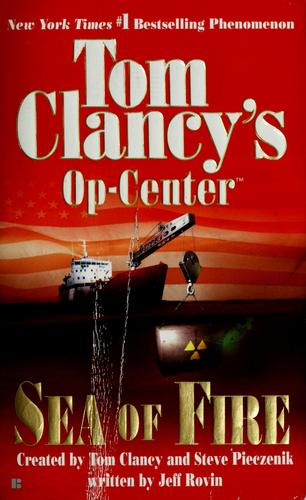
Alternative text for cover: Cover of Mission of HonorSea of Fire, the tenth Op-Center novel, was ghostwritten by Jeff Rovin and published in 2003 at 387 pages. Nearing the end of the original 1995-2005 run, it keeps the series' formula intact: a lean Washington task force reacting within hours to an international flashpoint via one unified chain of command.
Alternative text for cover: Cover of Sea of FireCall to Treason, the eleventh entry in Op-Center, was ghostwritten by Jeff Rovin and released in 2004 at 401 pages -- the penultimate book of the original run before War of Eagles closed it out the following year and the series went dormant for nearly a decade.
Alternative text for cover: Cover of Call to TreasonWar of Eagles was published in 2005, ghostwritten by Jeff Rovin under the Tom Clancy brand. Last entry of the original 1995-2005 run before the series' nine-year hiatus.
Alternative text for cover: Cover of War of EaglesOut of the Ashes was published in 2014, ghostwritten by Dick Couch and George Galdorisi under the Tom Clancy brand. Opens the 2014 relaunch, refreshing much of the Center's senior staff after the series' nine-year hiatus.
Alternative text for cover: Cover of Out of the AshesInto the Fire, published in 2015 at 359 pages, is credited to Tom Clancy's name but was actually written by Dick Couch and George Galdorisi. It follows the 2014 relaunch's Out of the Ashes, continuing the modernized, post-9/11 version of the Center's mission and personnel for a new generation of readers.
Alternative text for cover: Cover of Into the FireScorched Earth, ghostwritten by George Galdorisi, was released in 2016 at 320 pages as the fifteenth Op-Center novel. It continues the relaunched series' updated mission for a cyber-and-drone-era world, while keeping the crisis-of-the-week structure that ran through the original Rovin-authored books.
Alternative text for cover: Cover of Scorched EarthDark Zone, ghostwritten jointly by Jeff Rovin and George Galdorisi, was published in 2017 at 368 pages as the sixteenth Op-Center novel. By this point the post-2014 relaunch had settled its rotating authorship among Couch, Galdorisi and Rovin while keeping the Center's crisis-room structure consistent.
Alternative text for cover: Cover of Dark ZoneFor Honor, the seventeenth Op-Center novel, was ghostwritten by Jeff Rovin and published in 2018 at 352 pages. It continues the relaunched series' modernized take on the Center's original premise: a fast-reacting Washington task force paired with a field strike team, updated for a post-9/11 world.
Alternative text for cover: Cover of For HonorSting of the Wasp, the eighteenth Op-Center novel, was ghostwritten by Jeff Rovin and published in 2019 at 376 pages. Its title points to Black Wasp, one of the successor field units that replaced Rodgers's original Strike Force as the relaunched series updated the Center's personnel for a new era.
Alternative text for cover: Cover of Sting of the WaspGod of War, the nineteenth Op-Center novel, was ghostwritten by Jeff Rovin and published in 2020 at 352 pages. It continues the post-2014 relaunch's crisis-of-the-week structure, six years into the series' second run under Couch, Galdorisi and Rovin's rotating authorship.
Alternative text for cover: Cover of God of WarThe Black Order, the twentieth entry in Op-Center, was ghostwritten by Jeff Rovin and released in 2021 at 352 pages. Like the rest of the relaunched run, it keeps the Center's single-chain-of-command structure while reflecting the cyber-and-drone-era world the 2014 reboot updated the series for.
Alternative text for cover: Cover of The Black OrderCall of Duty, the twenty-first Op-Center novel, was ghostwritten by Jeff Rovin and published in 2022 at 352 pages. By this stage the relaunched series had run for nearly a decade under Rovin, Couch and Galdorisi's rotating authorship, still built around the Center's crisis room and its field strike team.
Alternative text for cover: Cover of Call of DutyFallout, ghostwritten by Jeff Rovin under the Tom Clancy brand, was published in 2023 at 336 pages -- the most recent entry as of this site's August 2026 curation. It continues nearly three decades of the series' crisis-of-the-week structure, from the original 1995 launch through the 2014 relaunch to this book.
Alternative text for cover: Cover of FalloutOp-Center is the fictional National Crisis Management Center, a lean Washington task force built to do what the CIA, the Pentagon and the State Department can't do fast enough on their own: react to an international flashpoint within hours, using a single chain of command that spans satellite surveillance, diplomacy and a Special Forces strike team on permanent standby. Created by Tom Clancy and psychiatrist-turned-crisis-negotiator Steve Pieczenik but written throughout by other novelists, the series opens with director Paul Hood, intelligence chief Bob Herbert and General Mike Rodgers steering the Center through the kind of geopolitical brushfires -- a coup in Russia, a stolen nuclear device, a Korean peninsula on the brink -- that Clancy's Jack Ryan novels handled from inside the White House.
Where Op-Center distinguishes itself from Clancy's own books is scale and tempo: each novel moves briskly between the crisis room, the field team (Rodgers's elite Strike Force, later Black Wasp and other successor units), and the antagonists' side of the board, favouring readable pace over the doorstop length of Clancy's solo work. The original run, ghostwritten almost entirely by Jeff Rovin from 1995 to 2005, gave way after a nine-year hiatus to a 2014 relaunch under new writers -- Dick Couch, George Galdorisi and a returning Rovin -- who updated the Center's mission and personnel for a post-9/11, cyber-and-drone-era world while keeping the crisis-of-the-week structure intact.
Tom Clancy wrote the series; books 1-22 were ghostwritten by Jeff Rovin; books 13-14 were ghostwritten by Dick Couch; books 13-16 were ghostwritten by George Galdorisi.
22 novels, from Tom Clancy's Op-Center (1995) to Fallout (2023). No new entry has been announced as of this site's August 2026 curation.
No. Clancy and psychiatrist Steve Pieczenik created the concept and characters, but every novel was written by other credited authors -- Jeff Rovin for the original twelve (1995-2005) and for several later entries, with Dick Couch and George Galdorisi joining from the 2014 relaunch onward.
Publication order throughout. The first twelve novels (1995-2005) form one continuous run; the series then resumed in 2014 with a partially refreshed cast, but the numbering and crisis-room premise carry on unbroken.
No. It's a separate Tom Clancy-branded universe with its own cast and no crossover characters, though it shares the same techno-thriller, real-world-geopolitics style as Clancy's Jack Ryan books.
Unclear. The series previously went dormant for nine years (2005-2014) before returning, and no new book has been announced since Fallout (2023), so status is treated as ongoing rather than confirmed complete.
Reading order last verified .