

Agent Pendergast
thriller
Series · legal thriller
The Alexandra Cooper series by Linda Fairstein has 20 known books (20 published) and is best read in publication order, starting with Final Jeopardy (1996).
Start here: Final Jeopardy (1996) — then read straight through in publication order.
The date order of published books and any announced future entries — the default way to read the series.
Final Jeopardy opens the Alexandra Cooper series in 1996, introducing Alex as head of the Manhattan DA's Sex Crimes Unit alongside NYPD detectives Mike Chapman and Mercer Wallace, the partnership that carries the rest of Linda Fairstein's twenty-book run. At 392 pages, it sets the template Fairstein followed for over two decades: a self-contained case rendered with a working prosecutor's own courtroom authority.
Alternative text for cover: Cover of Final JeopardyThe second Alexandra Cooper novel, published in 1997 at 448 pages, finds Alex, Chapman and Wallace working another Manhattan case a year after Final Jeopardy launched the series. Like the rest of Fairstein's run, it draws on her own nearly three decades leading the real Sex Crimes Unit, giving the investigation and courtroom mechanics a prosecutor's-eye precision.
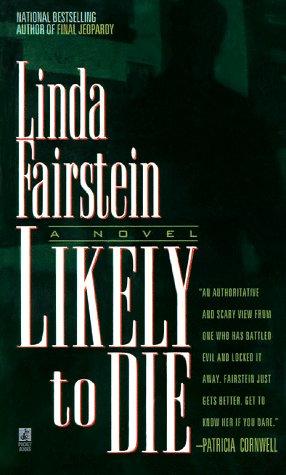
Alternative text for cover: Cover of Likely to DieCold Hit, the third entry in the series, appeared in 1999 at 440 pages, continuing Fairstein's roughly book-a-year pace through the Alex Cooper novels. As in the earlier books, the case is self-contained and resolves within its own covers, while Alex's working relationship with Chapman and Wallace keeps deepening across the sequence.
Alternative text for cover: Cover of Cold HitThe fourth Alexandra Cooper novel, The Deadhouse, was published in 2001 and runs 414 pages. It continues Fairstein's practice of grounding each case in a specific slice of New York institutional history, the same device she later used for the city's museums in The Bone Vault and its subway tunnels in Hell Gate.
Alternative text for cover: Cover of The DeadhouseThe Bone Vault, the fifth book in the series, is set against New York's museum world, one of the specific institutional settings Fairstein used to give her Manhattan cases a distinctive backdrop. Published in 2003 at 528 pages, it arrives between The Deadhouse and The Kills.
Alternative text for cover: Cover of The Bone VaultThe Kills, published in 2004 at 463 pages, is the sixth Alex Cooper novel, arriving after The Bone Vault's museum-world case and ahead of Entombed. Fairstein was by this point deep into her roughly annual publishing rhythm, each book pairing a self-contained Manhattan case with Alex, Chapman and Wallace's ongoing partnership.
Alternative text for cover: Cover of The KillsEntombed arrived in 2005 as the seventh Alexandra Cooper novel, running 435 pages between The Kills and Death Dance. Like its neighbors in the sequence, it pairs a stand-alone Manhattan case with the deepening working relationship between Alex, Mike Chapman and Mercer Wallace that spans the whole series.
Alternative text for cover: Cover of EntombedThe eighth entry, Death Dance, was published in 2006 at 402 pages, following Entombed and preceding Bad Blood in Fairstein's steady annual output. Its case is self-contained, as in every Alex Cooper novel, but the book also carries forward the accumulated history between Alex and her NYPD partners built up over the preceding seven installments.
Alternative text for cover: Cover of Death DanceBad Blood, the ninth Alexandra Cooper novel, appeared in 2007 at 424 pages. By this point in the series Fairstein had spent over a decade drawing on her own career running the Manhattan Sex Crimes Unit, and the courtroom and investigative procedure in Bad Blood carries that same working prosecutor's authority.
Alternative text for cover: Cover of Bad BloodKiller Heat, published in 2008 at 370 pages, is the tenth Alex Cooper novel, arriving between Bad Blood and Lethal Legacy. A decade into the series, Fairstein was still pairing each self-contained Manhattan case with a specific piece of New York geography or institutional history, the device that runs through the whole sequence.
Alternative text for cover: Cover of Killer HeatLethal Legacy, the eleventh Alexandra Cooper novel, was published in 2009 at 406 pages, following Killer Heat and preceding Hell Gate -- the entry that would send Alex into New York's subway tunnels. Fairstein kept the series at roughly a book a year through this stretch, each case self-contained within Alex, Chapman and Wallace's ongoing partnership.
Alternative text for cover: Cover of Lethal LegacyHell Gate, published in 2010 as the twelfth Alexandra Cooper novel, takes its case into New York's subway tunnels, one of the specific pieces of city geography and institutional history that Fairstein used to distinguish each entry, alongside the museums of The Bone Vault and the High Line development of the later Terminal City.
Alternative text for cover: Cover of Hell GateSilent Mercy, the thirteenth book in the series, was published in 2011 at 274 pages, notably shorter than most of its predecessors. It arrives well into Fairstein's roughly annual run of Alex Cooper novels, each pairing a self-contained Manhattan case with the prosecutor's-eye procedural detail drawn from her own decades running the real Sex Crimes Unit.
Alternative text for cover: Cover of Silent MercyNight Watch, published in 2012 at 310 pages, is the fourteenth entry in the Alexandra Cooper series, continuing Fairstein's steady annual pace. As with every book in the sequence, the case resolves within its own covers even as Alex's history with Chapman and Wallace keeps accumulating from one novel to the next.
Alternative text for cover: Cover of Night WatchDeath Angel, the fifteenth Alexandra Cooper novel, was published in 2013 at 346 pages, arriving between Night Watch and Terminal City, the book that would take the series into the High Line and West Side development. By this stage Fairstein had been writing Alex Cooper for close to two decades.
Alternative text for cover: Cover of Death AngelTerminal City, the sixteenth book in the series, is set amid New York's High Line and West Side development, one of the specific pieces of city geography Fairstein used to anchor individual cases, following the museums of The Bone Vault and the subway tunnels of Hell Gate earlier in the run. It was published in 2014 at 351 pages.
Alternative text for cover: Cover of Terminal CityDevil's Bridge, published in 2015 at 373 pages, is the seventeenth Alex Cooper novel, arriving between Terminal City and Killer Look. Fairstein was now nearly twenty years into the series, still pairing self-contained Manhattan cases with the ongoing partnership between Alex, Chapman and Wallace.
Alternative text for cover: Cover of Devil's BridgeKiller Look, the eighteenth entry, was published in 2016 at 255 pages, one of the shorter books in the series, arriving between Devil's Bridge and Deadfall as Fairstein's run entered its final few installments.
Alternative text for cover: Cover of Killer LookDeadfall, published in 2017 at 379 pages, is the penultimate Alexandra Cooper novel, arriving directly before the series' 2019 finale, Blood Oath. It continues the same self-contained-case structure Fairstein used throughout, grounded in her own long career running the real Manhattan Sex Crimes Unit.
Alternative text for cover: Cover of DeadfallBlood Oath, published in 2019 at 368 pages, is the twentieth and final Alexandra Cooper novel. It followed Deadfall as the series' capstone, closing out a run that had lasted since 1996; that same year, backlash over Fairstein's own history prosecuting the Central Park Five case ended her publishing relationship, and no further entry has followed.
Alternative text for cover: Cover of Blood OathAlexandra Cooper is the head of the Sex Crimes Unit in the Manhattan District Attorney's office, working New York homicide and sexual-assault cases alongside NYPD detectives Mike Chapman and Mercer Wallace across twenty novels by former real-life Manhattan sex-crimes prosecutor Linda Fairstein. Fairstein spent nearly three decades running the actual unit her fictional heroine leads, and the series draws heavily on that career: courtroom procedure, the mechanics of building a prosecutable case, and the specific texture of investigating crimes against women in New York City are rendered with a working prosecutor's authority rather than an outsider's research. The series opens with Final Jeopardy (1996), introducing Cooper alongside Chapman and Wallace, and each subsequent entry pairs a self-contained case with a distinctive slice of New York institutional history or geography -- the city's museums in The Bone Vault, its subway tunnels in Hell Gate, its High Line and West Side development in Terminal City. Fairstein kept the series running at roughly a book a year for over two decades. Blood Oath (2019) is the final entry: following public backlash over Fairstein's own history prosecuting the Central Park Five case after the 2019 Netflix series When They See Us, her publisher ended their relationship with her that June, and no further Alexandra Cooper novel has followed.
Twenty novels, from Final Jeopardy (1996) to Blood Oath (2019).
Publication order, starting with Final Jeopardy -- the recurring cast's relationships and history build across the series.
Effectively yes. Blood Oath (2019) is the most recent entry; author Linda Fairstein's publisher ended their working relationship in June 2019, and no further novel in the series has been published since.
Yes -- she headed the Manhattan District Attorney's Sex Crimes Unit for nearly 30 years before turning to fiction, and drew on that career for Alexandra Cooper's cases and courtroom procedure.
No -- Fairstein's separate Devlin Quick Mysteries, a middle-grade series about a 12-year-old detective, are unconnected to the Alexandra Cooper novels.
Reading order last verified .