

Splendid Trilogy
historical romance
Series · historical romance
The Poor Relation series by M. C. Beaton has 6 known books (6 published) and is best read in publication order, starting with Lady Fortescue Steps Out (1993).
Start here: Lady Fortescue Steps Out (1993) — then read straight through in publication order.
The date order of published books and any announced future entries — the default way to read the series.
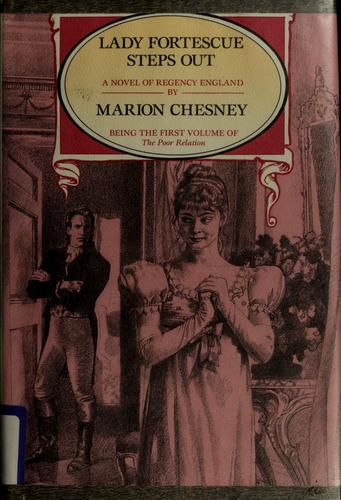
Lady Fortescue Steps Out, published in 1993 at 152 pages, opens M. C. Beaton's Poor Relation series (written under the Marion Chesney byline), introducing the six down-on-their-luck aristocrats who pool their remaining resources to open a Bond Street hotel rather than face the poorhouse. It's followed by Miss Tonks Turns to Crime, continuing the ensemble structure in which the romantic spotlight shifts to a different member of the genteel-poor household each time.
Alternative text for cover: Cover of Lady Fortescue Steps OutMiss Tonks Turns to Crime is a novel by M. C. Beaton, running at 216 pages in 1993. It is book #2 of Poor Relation. It picks up after Lady Fortescue Steps Out and hands off to Mrs. Budley Falls From Grace.
Alternative text for cover: Cover of Miss Tonks Turns to CrimeMrs. Budley Falls From Grace is a novel by M. C. Beaton in 1993. It sits at #3 in Poor Relation's reading order. Reading order runs Miss Tonks Turns to Crime to this book to Sir Philip's Folly.
Alternative text for cover: Cover of Mrs. Budley Falls From GraceSir Philip's Folly came out in 1993 at 148 pages, a novel by M. C. Beaton. It is entry #4 in Poor Relation. It sits between Mrs. Budley Falls From Grace and Colonel Sandhurst to the Rescue.
Alternative text for cover: Cover of Sir Philip's FollyColonel Sandhurst to the Rescue is a novel by M. C. Beaton, in 1994 at 152 pages. It holds position #5 in Poor Relation. Reading order runs Sir Philip's Folly to this book to Back in Society.
Alternative text for cover: Cover of Colonel Sandhurst to the RescueBack in Society is a novel by M. C. Beaton, running at 202 pages in 1994. It currently closes out Poor Relation. It follows Colonel Sandhurst to the Rescue.
Alternative text for cover: Cover of Back in SocietySix down-on-their-luck aristocrats -- the widowed Lady Fortescue, spinster Miss Tonks, the flighty Mrs. Budley, dissolute old soldier Colonel Sandhurst, ex-army Sir Philip Sommerville and hard-up gentleman Mr. Davy -- pool what little they have left to open a fashionable hotel in Bond Street, staffing and running it themselves rather than face the poorhouse or a humiliating dependence on relatives. Beginning with Lady Fortescue Steps Out, each of the six novels centers on one member of the makeshift household finding an unlikely late-life or unexpected romance while the group's Poor Relation hotel scheme lurches between near-ruin and surprising success.
Written under the Marion Chesney name in the early 1990s, the series stands out among Beaton's Regency work for centering older, previously overlooked protagonists -- most of the sextet are well past the usual Regency-heroine age -- and for its ensemble structure, since the same core cast of genteel-poor hoteliers recurs across all six books even as the romantic spotlight moves from one to the next. It's a warm, character-driven series for readers who want Regency romance with some grey hair and real financial stakes rather than another debutante's first season.
Six, published in 1993 and 1994, starting with Lady Fortescue Steps Out.
A group of impoverished aristocrats who open a hotel together in Regency London rather than face the poorhouse, with each book following a different member of the household finding romance.
Publication order: Lady Fortescue Steps Out, Miss Tonks Turns to Crime, Mrs. Budley Falls From Grace, Sir Philip's Folly, Colonel Sandhurst to the Rescue, and Back in Society.
Yes -- its ensemble of older, previously well-off-but-now-poor protagonists sets it apart from series like Six Sisters or School for Manners, which center on young debutantes.
Yes, originally as Marion Chesney; later editions have been reissued under the M.C. Beaton byline.
historical romance

historical romantic suspense

historical romance

historical romance

historical romance

historical romance

historical paranormal romantic suspense

historical romance
Reading order last verified .