
Diana Tregarde
urban fantasy
Series · fantasy
The Bromeliad Trilogy series by Terry Pratchett has 3 known books (3 published) and is best read in publication order, starting with Truckers (1989).
Start here: Truckers (1989) — then read straight through in publication order.
The date order of published books and any announced future entries — the default way to read the series.
Truckers (1989) opens The Bromeliad Trilogy at 288 pages, the longest of the three books, as the tiny Nomes' department-store home faces demolition and they stage an escape aboard a stolen truck.
Alternative text for cover: Cover of TruckersThe shortest of the trilogy at 152 pages, Diggers (1990) follows the Nomes as they try to build a new life in a working quarry, one of two sequels Terry Pratchett published within about eighteen months of Truckers to complete a single continuous story.
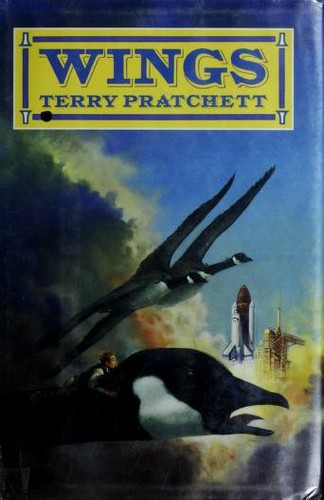
Alternative text for cover: Cover of DiggersWings closes the trilogy in 1990 at 215 pages, revealing the Nomes' extraterrestrial origins and their plan to return to space -- the payoff of Pratchett's philosophical undercurrents about faith and how a small society decides what's true about a world too big to fully perceive.
Alternative text for cover: Cover of WingsAlso known as the Nome Trilogy, this children's fantasy series follows the Nomes -- a race of tiny people, only a few inches tall, who have lived hidden inside a department store for a decade believing it to be the entire universe. Truckers (1989) begins when the store's imminent demolition forces the Nomes to make contact with the small band of 'Outside' Nomes who have survived in the wild, and to stage a desperate, resourceful escape aboard a stolen truck. It's Pratchett at his most inventive with scale, imagining human infrastructure entirely from a few-inches-tall perspective.
Diggers and Wings follow the Nomes as they try to build a new life in a working quarry and then discover, to the shock of the whole community, that their ancestors came from outer space -- setting up a plan to return there. As with much of Pratchett's early work, the trilogy balances broad comedy with real philosophical undercurrents about faith, technology, and how a small society decides what's true about a world too big for it to fully perceive.
Three: Truckers (1989), Diggers (1990), and Wings (1990).
Publication order: Truckers, Diggers, Wings. It's one continuous story.
Yes -- it's known by both names; Bromeliad Trilogy is the more common British title, Nome Trilogy the more common alternate/US description.
No -- it's a separate setting about tiny people called Nomes living hidden among humans, unrelated to Discworld.
Yes -- it was written and marketed for younger readers, similar in register to Pratchett's other children's fiction like the Johnny Maxwell trilogy and The Amazing Maurice and His Educated Rodents.
Reading order last verified .