

Jack Laidlaw
crime fiction
Series · mystery
The Vicky Bliss series by Elizabeth Peters has 7 known books (7 published) and is best read in publication order, starting with The Camelot Caper (1969).
Start here: The Camelot Caper (1969) — then read straight through in publication order.
The date order of published books and any announced future entries — the default way to read the series.
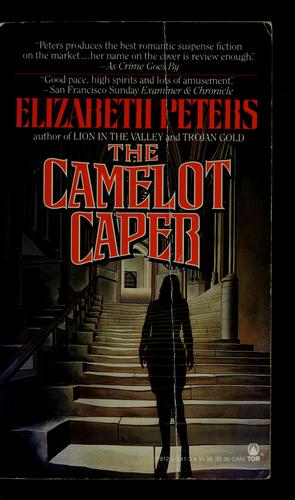
The Camelot Caper predates the Vicky Bliss novels, published in 1969 at 308 pages, introducing Sir John Smythe four years before he becomes Vicky's exasperating, undeniably charming partner-in-crime-solving. Vicky herself never appears in it, so it reads as a standalone Elizabeth Peters gothic adventure that can be read first, last, or skipped.
Alternative text for cover: Cover of The Camelot CaperBorrower of the Night, the true series opener, followed in 1973 at 247 pages, sending American art historian Vicky Bliss to a Bavarian castle riddled with a smuggling ring -- and introducing her to art thief and con man John Smythe, the series' real scene-stealer.
Alternative text for cover: Cover of Borrower of the NightStreet of the Five Moons came out in 1978, five years later, matching Borrower of the Night almost exactly at 243 pages, moving Vicky's forgery-and-theft entanglements with Smythe to Rome.
Alternative text for cover: Cover of Street of the Five MoonsSilhouette in Scarlet followed in 1983, also 243 pages, sending Vicky into a fake-relics operation in a small German town as her uncertain romance with John Smythe continues to develop.
Alternative text for cover: Cover of Silhouette in ScarletTrojan Gold arrived in 1987, growing to 352 pages, well past the length of the three books before it, and takes Vicky and Smythe through Sweden on the hunt for looted treasure.
Alternative text for cover: Cover of Trojan GoldNight Train to Memphis came out in 1994, seven years after Trojan Gold, and at 448 pages -- the longest book in the series -- carries Vicky's art-historical adventures with Smythe on to Egypt.
Alternative text for cover: Cover of Night Train to MemphisThe Laughter of Dead Kings closed the series in 2008 -- fourteen years after Night Train to Memphis, the widest gap between any two entries -- at 324 pages.
Alternative text for cover: Cover of The Laughter of Dead KingsVicky Bliss is a six-foot-tall American art historian working at a museum in Munich, whose genuine expertise in medieval and Renaissance art keeps landing her in the middle of forgery schemes, art theft, and murder across Europe. Elizabeth Peters (the pen name of Egyptologist Barbara Mertz) gives Vicky a very different voice from Amelia Peabody: funnier about her own vanity, more openly modern, and paired for most of the series with the series' real scene-stealer, the art thief and con man John Smythe -- a character so likeable in a minor role in Peters' earlier standalone The Camelot Caper that she brought him back and built a whole romantic-adventure partnership around him.
The books move from a Bavarian castle riddled with a smuggling ring, to Rome, to a fake-relics operation in a small German town, to a hunt through Sweden for looted treasure, and eventually to Egypt, as Vicky's academic career and her exasperating, unreliable, undeniably charming relationship with Smythe develop across four decades of publication. The tone sits closer to caper and romantic adventure than to strict detective fiction -- there is always a real crime and a real solution, but the pleasure is in Vicky's sharp first-person narration and the will-they-con-each-other chemistry with Smythe as much as the mystery plot itself.
At seven books across nearly forty years, it's a shorter, lighter-hearted companion to the Peabody novels, appealing to readers who want Peters' voice and art-historical detail in smaller, faster-paced doses, with a central romance that stays genuinely uncertain until deep into the series.
Seven, including The Camelot Caper (1969), which is usually counted as book 0.5 because it introduces John Smythe before Vicky Bliss herself appears in Borrower of the Night (1973).
Borrower of the Night is the true starting point, since that's where Vicky and John Smythe meet. The Camelot Caper can be read anytime, or skipped, since Vicky doesn't appear in it.
No. The Camelot Caper is narrated by a different character and only introduces Sir John Smythe, who becomes Vicky's love interest and partner-in-crime-solving starting with Borrower of the Night.
Yes. Elizabeth Peters (Barbara Mertz) died in 2013, and the series' seventh book, The Laughter of Dead Kings, published in 2008, was her last.
No direct crossover -- both are by Elizabeth Peters and share an interest in archaeology and art history, but Vicky Bliss is a contemporary-set series about a museum curator and art historian, distinct from Amelia Peabody's Victorian-Egyptian setting.
Reading order last verified .


