





The Cat Who...
cozy mystery
Series · mystery
The Hercule Poirot series by Agatha Christie has 41 known books (41 published) and is best read in publication order, starting with The Mysterious Affair at Styles (1920). Agatha Christie wrote the series; it was continued by Sophie Hannah.
Start here: The Mysterious Affair at Styles (1920) — then read straight through in publication order.
The date order of published books and any announced future entries — the default way to read the series.
"The Mysterious Affair at Styles" (1920) is Poirot's debut -- a solid entry that introduces the fastidious Belgian detective and his "little grey cells," though it's noticeably more old-fashioned than the books that follow. Many reading guides suggest a stronger entry point instead; it runs 204 pages.
Alternative text for cover: Cover of The Mysterious Affair at Styles"The Murder on the Links" (1923) is the second Hercule Poirot novel, part of the 33-book run Agatha Christie built between 1920 and 1975 around the fastidious Belgian detective and his "little grey cells." It runs 224 pages.
Alternative text for cover: Cover of The Murder on the Links"Poirot Investigates" (1924, 192 pages) is a Hercule Poirot short-story collection, one of the entries Agatha Christie wrote alongside her 33 full-length novels between 1920 and 1975 -- included here for completeness among the Poirot canon's "little grey cells" puzzles.
Alternative text for cover: Cover of Poirot Investigates"The Murder of Roger Ackroyd" (1926, 256 pages) is one of the three or four entries Christie fans and reading guides most often name as the strongest possible first Poirot novel, showcasing her fair-play puzzle plotting at its best.
Alternative text for cover: Cover of The Murder of Roger Ackroyd"The Big Four" (1927, 223 pages) is widely considered one of the two weakest entries in the Poirot canon, alongside the 1930 stage play Black Coffee -- not the place to start, though completists will still want it.
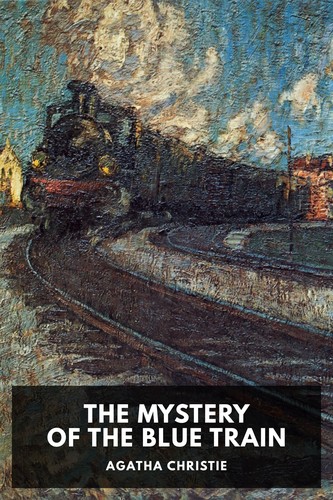
Alternative text for cover: Cover of The Big FourPublished 1928 at 257 pages, "The Mystery of the Blue Train" is Poirot's fifth case -- a fair-play puzzle mystery in Christie's classic mould, with a closed circle of suspects and a drawing-room reveal at the end.
Alternative text for cover: Cover of The Mystery of the Blue Train"Peril at End House" (1932, 224 pages) is the sixth entry in Christie's Poirot series, built on the same fair-play formula throughout: clues planted in plain sight for an attentive reader to (in theory) beat the detective to the solution.
Alternative text for cover: Cover of Peril at End HouseThe seventh Poirot novel, "Lord Edgware Dies" (1933) runs 238 pages and continues Christie's portrait of the Belgian refugee-turned-private-inquiry-agent who became the most famous fictional detective after Sherlock Holmes.
Alternative text for cover: Cover of Lord Edgware Dies"Murder on the Orient Express" (1934, 240 pages) is among Christie's best-known and most influential Poirot novels -- a closed-circle mystery set on a locked train carriage, twice adapted for film by Kenneth Branagh and often recommended as a first Poirot read.
Alternative text for cover: Cover of Murder on the Orient Express"Three Act Tragedy" (1934) is the ninth Poirot case at 248 pages, one more instalment in Christie's fair-play puzzle-mystery formula: a closed circle of suspects and a scattering of clues Poirot walks the reader back through at the end.
Alternative text for cover: Cover of Three Act Tragedy"Death in the Clouds" (1935) is the tenth Hercule Poirot novel, part of the 33-book run Agatha Christie built between 1920 and 1975 around the fastidious Belgian detective and his "little grey cells." It runs 251 pages.
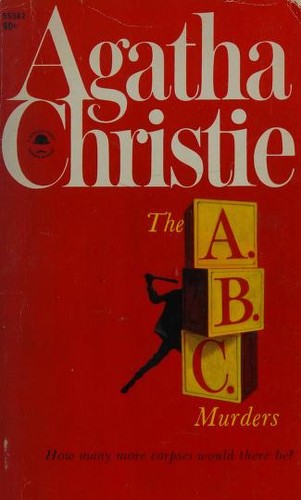
Alternative text for cover: Cover of Death in the Clouds"The A.B.C. Murders" (1936, 227 pages) ranks among the most influential Poirot mysteries and is regularly cited as one of the strongest entry points into the series, showcasing Christie's fair-play puzzle-plotting.
Alternative text for cover: Cover of The A.B.C. MurdersPublished 1936 at 248 pages, "Murder in Mesopotamia" is Poirot's 12th case -- a fair-play puzzle mystery in Christie's classic mould, with a closed circle of suspects and a drawing-room reveal at the end.
Alternative text for cover: Cover of Murder in Mesopotamia"Cards on the Table" (1936, 226 pages) is the 13th entry in Christie's Poirot series, built on the same fair-play formula throughout: clues planted in plain sight for an attentive reader to (in theory) beat the detective to the solution.
Alternative text for cover: Cover of Cards on the TableThe 14th Poirot novel, "Dumb Witness" (1937) runs 256 pages and continues Christie's portrait of the Belgian refugee-turned-private-inquiry-agent who became the most famous fictional detective after Sherlock Holmes.
Alternative text for cover: Cover of Dumb Witness"Death on the Nile" (1937, 276 pages) is one of Poirot's best-known cases, twice adapted for film by Kenneth Branagh -- a closed-circle mystery in the classic Christie mould of a scattering of clues planted in plain sight.
Alternative text for cover: Cover of Death on the Nile"Appointment with Death" (1938) is the 16th Poirot case at 224 pages, one more instalment in Christie's fair-play puzzle-mystery formula: a closed circle of suspects and a scattering of clues Poirot walks the reader back through at the end.
Alternative text for cover: Cover of Appointment with Death"Hercule Poirot's Christmas" (1938) is the 17th Hercule Poirot novel, part of the 33-book run Agatha Christie built between 1920 and 1975 around the fastidious Belgian detective and his "little grey cells." It runs 221 pages.
Alternative text for cover: Cover of Hercule Poirot's ChristmasPublished 1940 at 239 pages, "Sad Cypress" is Poirot's 18th case -- a fair-play puzzle mystery in Christie's classic mould, with a closed circle of suspects and a drawing-room reveal at the end.
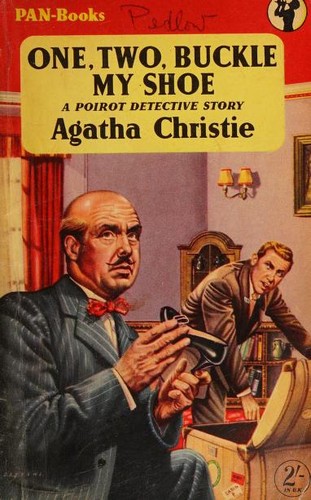
Alternative text for cover: Cover of Sad Cypress"One, Two, Buckle My Shoe" (1940, 208 pages) is the 19th entry in Christie's Poirot series, built on the same fair-play formula throughout: clues planted in plain sight for an attentive reader to (in theory) beat the detective to the solution.
Alternative text for cover: Cover of One, Two, Buckle My ShoeThe 20th Poirot novel, "Evil Under the Sun" (1941) runs 224 pages and continues Christie's portrait of the Belgian refugee-turned-private-inquiry-agent who became the most famous fictional detective after Sherlock Holmes.
Alternative text for cover: Cover of Evil Under the Sun"Five Little Pigs" (1942) is the 21st Poirot case at 234 pages, one more instalment in Christie's fair-play puzzle-mystery formula: a closed circle of suspects and a scattering of clues Poirot walks the reader back through at the end.
Alternative text for cover: Cover of Five Little Pigs"The Hollow" (1946) is the 22nd Hercule Poirot novel, part of the 33-book run Agatha Christie built between 1920 and 1975 around the fastidious Belgian detective and his "little grey cells." It runs 252 pages.
Alternative text for cover: Cover of The Hollow"The Labours of Hercules" (1947, 263 pages) is a Hercule Poirot short-story collection, one of the entries Agatha Christie wrote alongside her 33 full-length novels between 1920 and 1975 -- included here for completeness among the Poirot canon's "little grey cells" puzzles.
Alternative text for cover: Cover of The Labours of HerculesPublished 1948 at 224 pages, "Taken at the Flood" is Poirot's 23rd case -- a fair-play puzzle mystery in Christie's classic mould, with a closed circle of suspects and a drawing-room reveal at the end.
Alternative text for cover: Cover of Taken at the Flood"Mrs McGinty's Dead" (1952, 234 pages) is the 24th entry in Christie's Poirot series, built on the same fair-play formula throughout: clues planted in plain sight for an attentive reader to (in theory) beat the detective to the solution.
Alternative text for cover: Cover of Mrs McGinty's DeadThe 25th Poirot novel, "After the Funeral" (1953) runs 237 pages and continues Christie's portrait of the Belgian refugee-turned-private-inquiry-agent who became the most famous fictional detective after Sherlock Holmes.
Alternative text for cover: Cover of After the Funeral"Hickory Dickory Dock" (1955) is the 26th Poirot case at 128 pages, one more instalment in Christie's fair-play puzzle-mystery formula: a closed circle of suspects and a scattering of clues Poirot walks the reader back through at the end.
Alternative text for cover: Cover of Hickory Dickory Dock"Dead Man's Folly" (1956) is the 27th Hercule Poirot novel, part of the 33-book run Agatha Christie built between 1920 and 1975 around the fastidious Belgian detective and his "little grey cells." It runs 217 pages.
Alternative text for cover: Cover of Dead Man's FollyPublished 1959 at 256 pages, "Cat Among the Pigeons" is Poirot's 28th case -- a fair-play puzzle mystery in Christie's classic mould, with a closed circle of suspects and a drawing-room reveal at the end.
Alternative text for cover: Cover of Cat Among the Pigeons"The Clocks" (1963, 257 pages) is the 29th entry in Christie's Poirot series, built on the same fair-play formula throughout: clues planted in plain sight for an attentive reader to (in theory) beat the detective to the solution.
Alternative text for cover: Cover of The ClocksThe 30th Poirot novel, "Third Girl" (1966) runs 253 pages and continues Christie's portrait of the Belgian refugee-turned-private-inquiry-agent who became the most famous fictional detective after Sherlock Holmes.
Alternative text for cover: Cover of Third Girl"Hallowe'en Party" (1969) is the 31st Poirot case at 244 pages, one more instalment in Christie's fair-play puzzle-mystery formula: a closed circle of suspects and a scattering of clues Poirot walks the reader back through at the end.
Alternative text for cover: Cover of Hallowe'en Party"Elephants Can Remember" (1972) is the 32nd Hercule Poirot novel, part of the 33-book run Agatha Christie built between 1920 and 1975 around the fastidious Belgian detective and his "little grey cells." It runs 224 pages.
Alternative text for cover: Cover of Elephants Can Remember"Curtain: Poirot's Last Case" (1975, 232 pages) is Poirot's explicit swansong -- Christie wrote it decades before its 1975 publication and sealed off the character's story on her own terms. It's best saved until you've read enough earlier books to feel its weight.
Alternative text for cover: Cover of Curtain: Poirot's Last Case"The Monogram Murders" (2014, 320 pages) is the first of Sophie Hannah's authorised continuation novels, begun in 2014 and set in Poirot's original era for readers who've finished Christie's own run and want more without it reading as pastiche.
Alternative text for cover: Cover of The Monogram Murders"Closed Casket" (2016, 302 pages) is one of Sophie Hannah's authorised Poirot continuation novels, written in Poirot's original era since 2014 as an optional extra for readers who have finished Christie's own 33 books.
Alternative text for cover: Cover of Closed Casket"The Mystery of Three Quarters" (2018) picks up the Hercule Poirot series after "Closed Casket", written by Sophie Hannah in the role of continuation author.
Alternative text for cover: Cover of The Mystery of Three QuartersFollowing "The Mystery of Three Quarters", "The Killings at Kingfisher Hill" was written by Sophie Hannah, Hercule Poirot's continuation author, and published in 2020.
Alternative text for cover: Cover of The Killings at Kingfisher HillPublished 2023 at 340 pages, "Hercule Poirot's Silent Night" continues Sophie Hannah's licensed Poirot continuation series -- set in the detective's original period, for fans who want more Poirot without it being pastiche.
Alternative text for cover: Cover of Hercule Poirot's Silent NightFollowing "Hercule Poirot's Silent Night", "The Last Death of the Year" was written by Sophie Hannah, Hercule Poirot's continuation author, and published in 2025.
Alternative text for cover: Cover of The Last Death of the YearHercule Poirot is the fastidious, egg-headed Belgian detective who solves murders with his "little grey cells" rather than legwork — a private inquiry agent, former Belgian policeman, and refugee of the First World War who settles in England and becomes the most famous fictional detective after Sherlock Holmes. Agatha Christie built the character across 33 novels and dozens of short stories between 1920 and 1975, perfecting the fair-play puzzle mystery: a closed circle of suspects, a country house or a locked train carriage, a scattering of clues planted in plain sight, and a final drawing-room scene where Poirot walks the reader back through every lie. The appeal is the puzzle itself — Christie plays scrupulously fair, so an attentive reader can, in theory, beat Poirot to the solution, and the fun is in trying and almost always failing.
The best-known entries (Murder on the Orient Express, Death on the Nile, The A.B.C. Murders) rank among the most influential mysteries ever written, twice adapted for film by Kenneth Branagh and dramatised in full by David Suchet's long-running ITV series. Christie also wrote Poirot's swansong, Curtain, decades before its 1975 publication, sealing off the character's story on her own terms. Since 2014, novelist Sophie Hannah has written authorised continuation novels set in Poirot's original era, for readers who have finished Christie's run and want more without it being pastiche. This is the series for anyone who wants the genre's gold standard: elegant misdirection, a satisfying reveal, and a detective whose vanity is as entertaining as his brilliance.
Agatha Christie wrote the series; it was continued by Sophie Hannah.
Agatha Christie wrote 33 Poirot novels between 1920 and 1975, plus short-story collections including Poirot Investigates and The Labours of Hercules. Since 2014, Sophie Hannah has added six authorised continuation novels, for 39 novels (41 entries counting the two collections) tracked here.
Publication order is the default and the novels are almost entirely standalone. If you'd rather skip the more dated debut, start with The Murder of Roger Ackroyd or Murder on the Orient Express instead of The Mysterious Affair at Styles.
No. Nearly every novel is a self-contained case. The one exception is Curtain, explicitly written as Poirot's final case — save it for last.
They're optional. Sophie Hannah's authorised continuations (starting with The Monogram Murders, 2014) are set in Poirot's original 1920s–30s era and aim for the classic puzzle style, but they're a modern writer's take rather than Christie's own work — best treated as a bonus after finishing the originals.
The most recent is Sophie Hannah's The Last Death of the Year (November 2025). No new Poirot novel has been announced as of mid-2026.
Reading order last verified .