



The Dark Tower
epic fantasy
Series · fantasy
The Incarnations of Immortality series by Piers Anthony has 8 known books (8 published) and is best read in publication order, starting with On a Pale Horse (1983).
Start here: On a Pale Horse (1983) — then read straight through in publication order.
The date order of published books and any announced future entries — the default way to read the series.
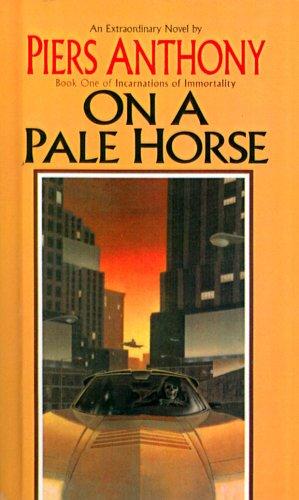
On a Pale Horse , written by Piers Anthony, is the first book in the Incarnations of Immortality series, dated 1983. It spans 336 pages and follows a suicidal man who accidentally kills Death himself and must take up the office, learning to collect souls with fairness rather than cruelty.
Alternative text for cover: Cover of On a Pale HorseBearing an Hourglass , written by Piers Anthony, is the second entry in the Incarnations of Immortality series, published in 1984. It runs 378 pages and follows the mortal who takes on the office of Time, one of the cosmic jobs -- alongside Death, Fate, War, Nature, Evil, and Good -- that structure the series.
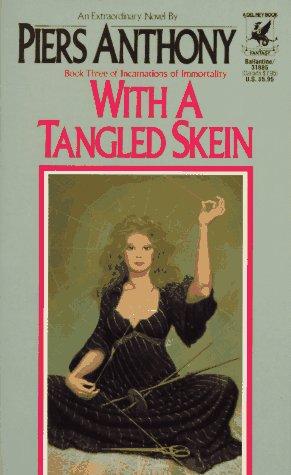
Alternative text for cover: Cover of Bearing an HourglassReleased in 1985, With a Tangled Skein is the third book in the Incarnations of Immortality series. It is the longest book in the series at 416 pages, following a woman with the second sight of Fate who must learn to weave the threads of countless lives.
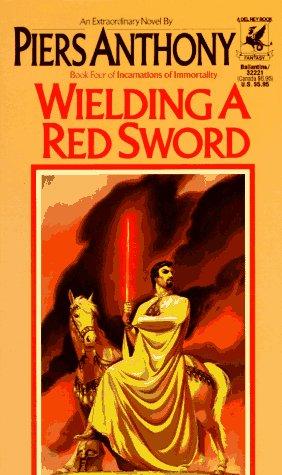
Alternative text for cover: Cover of With a Tangled SkeinWielding a Red Sword , written by Piers Anthony, is the fourth book in the Incarnations of Immortality series, dated 1986. It spans 320 pages and follows the reluctant new War, who must decide whether conflict can ever be wielded justly.
Alternative text for cover: Cover of Wielding a Red SwordNumber 5 in the Incarnations of Immortality series, Being a Green Mother was dated 1987. It runs 317 pages and was written by Piers Anthony, taking on the office of Nature as a meditation on ecological balance and motherhood.
Alternative text for cover: Cover of Being a Green MotherFor Love of Evil , written by Piers Anthony, is the sixth entry in the Incarnations of Immortality series, released in 1988. It spans 330 pages and gives Satan, the incumbent Evil, an origin story built around temptation and the seductive logic of villainy.
Alternative text for cover: Cover of For Love of EvilAnd Eternity , written by Piers Anthony, is the seventh entry in the Incarnations of Immortality series, published in 1990. It spans 384 pages and brings the seven core Incarnations -- Death, Time, Fate, War, Nature, Evil, and Good -- toward their shared confrontation with Satan.
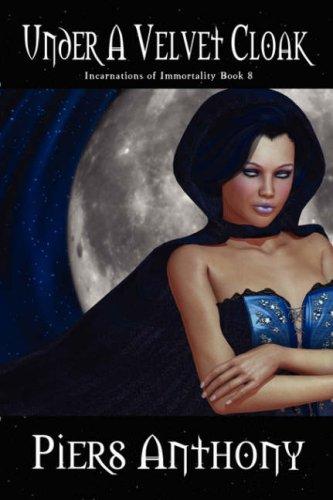
Alternative text for cover: Cover of And EternityThe eighth book in the Incarnations of Immortality series, Under a Velvet Cloak was released in 2007. It arrived 17 years after And Eternity. It is the shortest book in the series at 228 pages.
Alternative text for cover: Cover of Under a Velvet CloakDeath, Time, Fate, War, Nature, Evil, and Good are not just abstractions in this series — they are jobs, held by mortals who take on the office (and its immense, world-shaping power) the way someone might inherit a business. Each novel follows a different ordinary person's recruitment into one of these cosmic offices: a suicidal man becomes the new Death and must learn to collect souls with fairness rather than cruelty; a woman with the second sight of Fate must weave the threads of countless lives; the reluctant new War must decide whether conflict can ever be wielded justly. The offices exist in tension with one another and with Satan, the incumbent Evil, whose long game to seize control of Heaven itself threads through the individual books toward a shared endgame.
Piers Anthony treats each office-holder's transformation as a serious meditation on what that abstraction actually means in practice — Death's book is genuinely about mortality and mercy, Nature's about ecological balance and motherhood, Evil's about temptation and the seductive logic of villainy — while keeping the pace and incident of commercial fantasy adventure. Published between 1983 and 1990, with a later addendum in 2007, the seven core novels can be read as a loose ensemble cast: characters who are protagonists in one book reappear as supporting cast, rivals, or love interests in others, and the series builds toward a shared confrontation between the Incarnations and Satan that reframes everything that came before it.
Seven core novels were published between 1983 and 1990 (On a Pale Horse through And Eternity), plus a later addendum, Under a Velvet Cloak, in 2007.
Publication order, starting with On a Pale Horse. Characters and plot threads carry across the seven core novels toward a shared confrontation with Satan, so sequence matters.
Yes - the series builds a single overarching conflict between the human Incarnations and Satan (Evil) that resolves across multiple books, particularly the later volumes, so skipping entries will mean missing setup for the payoff.
No. Published in 2007, seventeen years after the core series concluded, it's a later addendum centered on the Incarnation of Night rather than a numbered continuation of the main seven-book arc.
Cosmic offices like Death, Time, Fate, War, Nature, Evil, and Good are held by ordinary mortals who take over the role - and its power - the way someone might inherit a job, with each novel following a different office-holder's recruitment and struggles.
Reading order last verified .