Demonwar Saga
fantasy
The Time of Legends: The Legend of Sigmar series by Graham McNeill has 3 known books (3 published). It is best read in publication order, starting with Heldenhammer (2008).
The Time of Legends: The Legend of Sigmar series has 3 books on our list. Since all 3 are out now, you can read the whole list today.
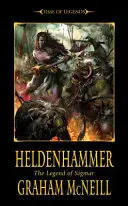
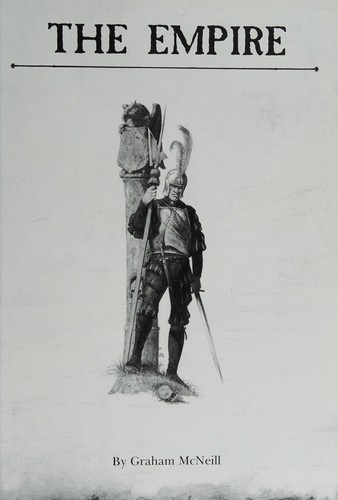
Start with Heldenhammer, since it opens the publication order in 2008. Empire is book 2, from 2009. God King is book 3, from 2010.
Each title links to its own page, while the list keeps them in date order. Each book page shows its dates and editions. Since the catalogue marks the series as complete, we list no next book.
The books came out between 2008 and 2010. That is a run of 2 years.
Graham McNeill has 35 books on our list. Additionally, they write Ultramarines, The Ambassador Chronicles and High Elf Novels, plus 2 more series. We shelve the books under fantasy.
Graham McNeill's Legend of Sigmar trilogy is an origin story for the Warhammer Fantasy setting itself, dramatizing the founding of the Empire by the human tribal chieftain Sigmar Heldenhammer roughly two and a half thousand years before the setting's present day. Heldenhammer follows Sigmar uniting the fractious human tribes of the Empire's founding territories against orc invasion and forging the alliance with the dwarfs that becomes one of Warhammer Fantasy's defining relationships; Empire (which won the 2010 David Gemmell Legend Award) follows Sigmar consolidating and governing the nation he's built, against internal rebellion and external threat alike; God King closes the trilogy with Sigmar's final campaigns and his eventual, mysterious departure from the world he founded, ascending to become the Empire's patron god.
Because it's origin myth rather than a lone-hero adventure, the trilogy reads more like an early-medieval epic than typical Black Library military fantasy -- tribal politics, oath-taking, and nation-building carry as much weight as the battles, and McNeill takes real care establishing why the Empire's institutions (the Colleges of Magic, the alliance with the dwarfs, the reverence for Sigmar himself) exist the way they do in every other Warhammer Fantasy novel set centuries later.
Three: Heldenhammer (2008), Empire (2009), and God King (2010).
Publication order, which is also the only order -- it's a single continuous story following Sigmar from young chieftain to god-king.
Yes -- it's set roughly 2,500 years before most other Warhammer Fantasy fiction and dramatizes the founding of the Empire and the origin of Sigmar as the setting's patron god.
Yes -- Empire won the 2010 David Gemmell Legend Award for best fantasy novel.