




Travelling Matchmaker
historical romance
Series · historical fiction
The Masters of Rome series by Colleen McCullough has 7 known books (7 published) and is best read in publication order, starting with The First Man in Rome (1990). The latest book with a fully recorded publication date is Antony and Cleopatra.
Start here: The First Man in Rome (1990) — then read straight through in publication order.
The date order of published books and any announced future entries — the default way to read the series.
The First Man in Rome opened Colleen McCullough's Masters of Rome series in 1990, an enormous 1,076-page debut. It begins the seven-book chronicle of the Roman Republic's last decades with the rise of Gaius Marius in 110 BC.
Alternative text for cover: Cover of The First Man in RomeThe Grass Crown followed a year later in 1991, at 1,072 pages -- almost exactly as long as its predecessor -- continuing McCullough's exhaustively researched chronicle of Marius, Sulla, and the Republic's slow unraveling.
Alternative text for cover: Cover of The Grass CrownFortune's Favourites came two years after that, in 1993, running 1,056 pages as the third entry, advancing the series' enormous real-historical cast -- Marius, Sulla, Pompey, Crassus -- toward the rise of a young Julius Caesar.
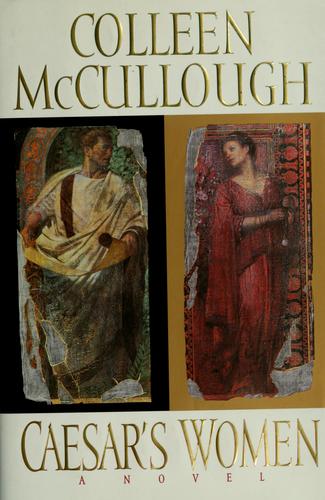
Alternative text for cover: Cover of Fortune's FavouritesCaesar's Women, published in 1996, is noticeably shorter than the first three books at 960 pages. It opens the series' central arc tracking Caesar's rise, continuing through Caesar to his assassination in The October Horse.
Alternative text for cover: Cover of Caesar's WomenCaesar followed in 1997, a year after Caesar's Women, and continues the series' downward trend in length at 664 pages, tracking Julius Caesar's ascent through the civil wars and political assassinations that define the era.
Alternative text for cover: Cover of CaesarThe October Horse arrived on November 26, 2002, five years after Caesar, and at 1,120 pages is the longest book in the entire series. It brings the central Caesar arc to its climax with his assassination.
Alternative text for cover: Cover of The October HorseAntony and Cleopatra closed the series on December 4, 2007, five years after The October Horse, and at 576 pages is by far the shortest entry, tracking the aftermath of Caesar's death through to Antony and Cleopatra's defeat in 27 BC and the Republic's final collapse into empire.
Alternative text for cover: Cover of Antony and CleopatraColleen McCullough's Masters of Rome novels are a seven-book chronicle of the last decades of the Roman Republic, from the rise of Gaius Marius in 110 BC to the aftermath of Antony and Cleopatra's defeat in 27 BC — the century in which the Republic tore itself apart and Rome became an empire in all but name. Beginning with The First Man in Rome, the series tracks an enormous cast of real historical figures — Marius, Sulla, Pompey, Crassus, Cato the Younger, and eventually Julius Caesar himself — through civil wars, political assassination, proscription, and the slow collapse of a system of government that had run Rome for centuries.
The appeal is scale and rigour: McCullough, a trained scientist before she was a novelist, researched the series for years and appends extensive historical notes and glossaries to each volume, rendering Roman law, military structure, and Senate politics in exacting, immersive detail. It's less about battles than about power — how ambitious men bend or break a republic's institutions — with Caesar's rise, from Caesar's Women through Caesar to his assassination in The October Horse, forming the series' central arc.
This is the series for readers who want ancient Rome rendered with academic seriousness rather than pulp adventure — dense, doorstop-length novels (many run past 1,000 pages) that reward patience with an unmatched sense of how the Republic actually worked, and why it fell.
Seven novels, from The First Man in Rome (1990) to Antony and Cleopatra (2007).
Publication order, which is also chronological order: The First Man in Rome, The Grass Crown, Fortune's Favourites, Caesar's Women, Caesar, The October Horse, and Antony and Cleopatra. It's written as one continuous history.
Yes. Colleen McCullough completed all seven planned novels; Antony and Cleopatra (2007) closes out the series. McCullough died in 2015 without writing further entries.
No — it's historical fiction built around real events and real historical figures (Marius, Sulla, Pompey, Caesar, Antony, Cleopatra, and many more), but McCullough invents dialogue, private motivations, and some minor characters and incidents in service of the story.
Yes. The novel's canonical title is simply Caesar; some editions carry the subtitle Let the Dice Fly (a translation of Caesar's own alea iacta est), which has occasionally led to it being listed as a different title.
historical romance

historical fiction

historical romance

historical fiction
historical romance

historical fiction

historical romance

historical romance
Reading order last verified .