

Heralds of Valdemar
fantasy
Series · fantasy
The Tales of Alvin Maker series by Orson Scott Card has 7 known books (7 published) and is best read in publication order, starting with Seventh Son (1987). The latest book with a fully recorded publication date is Master Alvin.
Start here: Seventh Son (1987) — then read straight through in publication order.
The date order of published books and any announced future entries — the default way to read the series.
Seventh Son opens Orson Scott Card's alternate-history frontier fantasy in January 1987, introducing Alvin -- a seventh son of a seventh son born with the rare gift of 'making' -- as the supernatural Unmaker begins hunting him from infancy. Set in a reimagined early-19th-century America where folk magic is ordinary, it runs 241 pages.
Alternative text for cover: Cover of Seventh SonRed Prophet followed a year later, in 1988, widening the series from Alvin's personal survival into the frontier's clashes over land and expansion. Growing to 311 pages, it's longer than the series opener.
Alternative text for cover: Cover of Red ProphetPrentice Alvin, published in 1989, is the shortest of the first three novels at 200 pages, continuing Alvin's bildungsroman as he apprentices his way toward the builder he's meant to become.
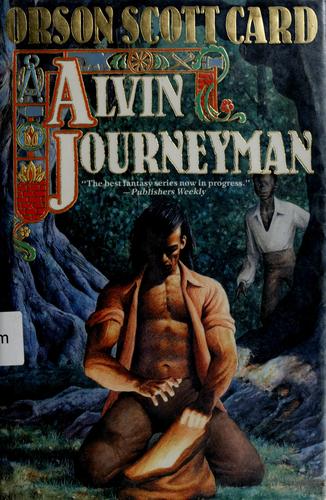
Alternative text for cover: Cover of Prentice AlvinA six-year gap separates Prentice Alvin from Alvin Journeyman, published in 1995 as the longest book in the series to that point at 381 pages, carrying Alvin further into adulthood and the costs his gift exacts on the people around him.
Alternative text for cover: Cover of Alvin JourneymanHeartfire followed in 1998, three years after Alvin Journeyman, continuing the series' meditation on slavery and frontier expansion refracted through Alvin's growing power. It runs 336 pages.
Alternative text for cover: Cover of HeartfireThe Crystal City arrived in 2003, five years after Heartfire, pushing Alvin toward the legendary city-building ambition that gives the series its title. It runs 353 pages and was, for over two decades, the series' last published volume.
Alternative text for cover: Cover of The Crystal CityMaster Alvin closes out the series, arriving on April 28, 2026 -- 23 years after The Crystal City -- as the seventh and final entry after Orson Scott Card's long-running gap between books.
Alternative text for cover: Cover of Master AlvinSet in an alternate frontier America where folk magic genuinely works, the Tales of Alvin Maker follows Alvin, a seventh son of a seventh son born with the rare gift of 'making' -- an intuitive power to shape and heal matter itself -- who is marked from birth as the target of an implacable supernatural enemy, the Unmaker, that wants him dead before he can grow into his full power. Card reimagines the early 19th-century United States (called here by different names, with historical figures appearing in altered forms) as a place where hexes, dowsing, and folk charms are ordinary tools of survival, and builds a sweeping bildungsroman around Alvin's journey from a threatened child to a builder trying to raise a legendary Crystal City.
Across six novels -- Seventh Son, Red Prophet, Prentice Alvin, Alvin Journeyman, Heartfire, and The Crystal City -- the series widens from Alvin's personal survival into a meditation on frontier expansion, slavery, and the cost of Alvin's gift to the people and land around him. It remains one of Card's most acclaimed works outside the Enderverse, praised for its distinctive voice and its serious engagement with American history refracted through fantasy.
Seven: Seventh Son (1987), Red Prophet (1988), Prentice Alvin (1989), Alvin Journeyman (1995), Heartfire (1998), The Crystal City (2003), and the concluding volume Master Alvin (2026).
Publication order, which also matches the story's chronology: Seventh Son, Red Prophet, Prentice Alvin, Alvin Journeyman, Heartfire, The Crystal City, Master Alvin.
After more than 20 years of delay, yes -- Master Alvin, the seventh and concluding volume, is scheduled for publication by Tor Books on April 28, 2026.
No -- it's an entirely separate alternate-history fantasy setting, unrelated to Ender's Game and its sequels.
Card draws on real 19th-century American folk magic traditions -- hexes, dowsing, charms, and 'knacks' -- reimagining the frontier United States as a place where such practices genuinely work.
Reading order last verified .